
What separates the best balayage in Fort Myers
Balayage is the most requested color technique in the salon — and the most unevenly executed one in the industry. Here is what actually separates great balayage from the merely fashionable kind, explained the way a stylist would explain it to a friend, so you can judge any salon's work. Including ours.
Reviewed
First, the thirty-second version of what balayage is: color painted by hand onto the surface of each section, saturated through the ends and feathered toward the root, so the result mimics what sun does to hair over a summer. No stripes, no hard regrowth line, a grow-out that softens instead of demanding an appointment. (If you already know you want it and are simply choosing where, our balayage service page covers the appointment itself — timings, aftercare and booking.)
The technique's popularity is exactly why quality varies so much. "Balayage" appears on nearly every salon menu in Lee County, but the word describes a skill, not a checkbox — and the difference between good and great comes down to three things you can learn to see: sectioning, tone strategy, and how honestly the salon talks about maintenance.
First, untangle the vocabulary
Salon menus use these words loosely, so it pays to know what you are actually comparing. Balayage is the freehand painting technique itself — open-air, soft, diffused. Foilyage is the same painted placement wrapped in foil, which keeps the lightener warmer so it lifts further; it is usually the right call for darker brunettes who want real brightness without stripes. A root melt or shadow root blurs or deepens the root area so the grow-out looks deliberate from the first week. And a gloss or toner is the translucent finishing layer that gives the whole thing its tone — the part that fades first and gets refreshed most often. When two salons quote you differently for "balayage," they are often describing different combinations of these. Ask which. (We break each of them down further on the service page, and highlights have a page of their own if foil-first precision is really what you are after.)
Sectioning and saturation — where balayage is won or lost
Great balayage is architecture before it is artistry. The stylist maps the head the way you actually wear your hair — your part, your hairline, the pieces that fall around your face — and takes sections whose size and angle decide everything downstream. Sections too thick read as chunky panels; too thin and the result disappears after one wash. The painting itself is a matter of saturation control: enough lightener, worked in firmly enough to lift evenly, feathered at the top edge so there is no visible start-line.
You can see this in any salon's portfolio if you know where to look. Zoom in on where the color begins near the root: a soft, diffused transition means disciplined hands; a row of blurry stripes means speed. Look at the ends: they should be believably brighter, not fried pale. And look at the face-frame, because that is the hardest part to paint and the first thing everyone sees. Freehand painting rewards a stylist who takes their time — which is why balayage at a salon that books it as a quick service rarely survives close inspection.
Tone strategy for the Gulf sun — the part out-of-town guides miss
Most balayage advice is written for climates where hair sees gentle sun a few months a year. Fort Myers is not that. Here, ultraviolet exposure is effectively year-round, and salt water, pool chlorine and humidity all push lightened hair toward brass faster than the reference photos assume. A colorist working in southwest Florida has to plan tone the way a sailor plans for current — aiming slightly cooler and deeper than the target, because the environment will pull warm all by itself.
This is where formulation knowledge earns its keep: choosing a toner that fades gracefully rather than suddenly, keeping enough depth at the root so the grow-out stays elegant, and being willing to say "that Scandinavian ice-blonde photo will be yellow by Labor Day unless we adapt it." Humidity matters too — Florida frizz changes how dimension reads in real life, so the placement has to work on your hair as it behaves in August, not as it behaves under a salon blow-out. Even your water plays a part: mineral-heavy well and pool water deposits onto lightened hair and drags tone warm, which is one more reason local experience beats a technique certificate earned in a different climate.
Maintenance honesty — what a great salon tells you before you book
Balayage earned its reputation as low-maintenance color, and compared with all-over blonde it is. But "low maintenance" was never "no maintenance," and the fastest way to spot a salon interested in your long-term hair rather than your first invoice is whether anyone tells you the whole truth up front: the painted dimension lasts three to four months, the tone over it needs a gloss every six to eight weeks in this climate, and dark or previously colored hair may take more than one session — with color correction sometimes the honest first step. A salon that promises one-and-done everything is selling; a salon that maps a realistic rhythm is planning.
Brunette, blonde and everything between — what changes
The same technique makes different demands depending on your base. On brunettes, the skill is restraint: caramel and toffee ribbons that stay warm without tipping orange, and enough remaining depth that the dimension reads as expensive rather than striped. On blondes, the skill is tone management: keeping brightness clean while the Florida environment pulls it yellow, which usually means beige and beach rather than ice. Redheads sit somewhere trickier — copper fades fastest of all, so the plan leans harder on gloss cadence than on lift. A colorist who talks about your base color and your climate in the same sentence is thinking about the right things.
What the appointment itself should feel like
Great balayage takes time, and the appointment structure tells you whether a salon respects that. Expect a genuine consultation before any mixing; expect the painting to be unhurried — a full head, painted properly, is measured in hours, not minutes; and expect the toner at the end to be treated as the finish line rather than an afterthought, because it is doing half the aesthetic work. Expect, too, to leave with a specific maintenance plan: when to gloss, when to return for the next full session, and what to use at home. If you are rebooked before you reach the door with no conversation about your hair's actual pace, the schedule is serving the diary, not you.
Questions worth asking before you book anywhere
- Which color line do you formulate with, and what balayage training has the team had in it?
- Given my hair history, what can one session honestly achieve — and what would take two?
- Would you paint this open-air or use foilyage on my base, and why?
- How will you tone it so it survives the Gulf sun, and how often will I need a gloss?
- What will this look like in three months if I do nothing?
None of these are gotcha questions. They are the questions a good colorist is already answering in their head — asking them out loud simply shows you whether the thinking is happening. For the salon around the colorist — consultation habits, training, policies — our guide to how to choose the best hair salon in Fort Myers covers the rest.
How we paint it at Canterbury & Co.
The Canterbury Color Team specializes in Wella Professionals color — lighteners chosen for your hair's condition, Shinefinity glosses for tone — and its balayage is painted after a consultation that covers your hair history, your routine and the maintenance rhythm you can actually live with. Our founder spent years as a Wella color educator training other salons' stylists, and our employed stylists work to one standard through a structured career ladder, so the sectioning discipline above is not one chair's specialty — it is the house style. When foilyage will get a dark base further, or a shadow root will make your grow-out prettier, we say so; when a photo needs two sessions, we say that too.
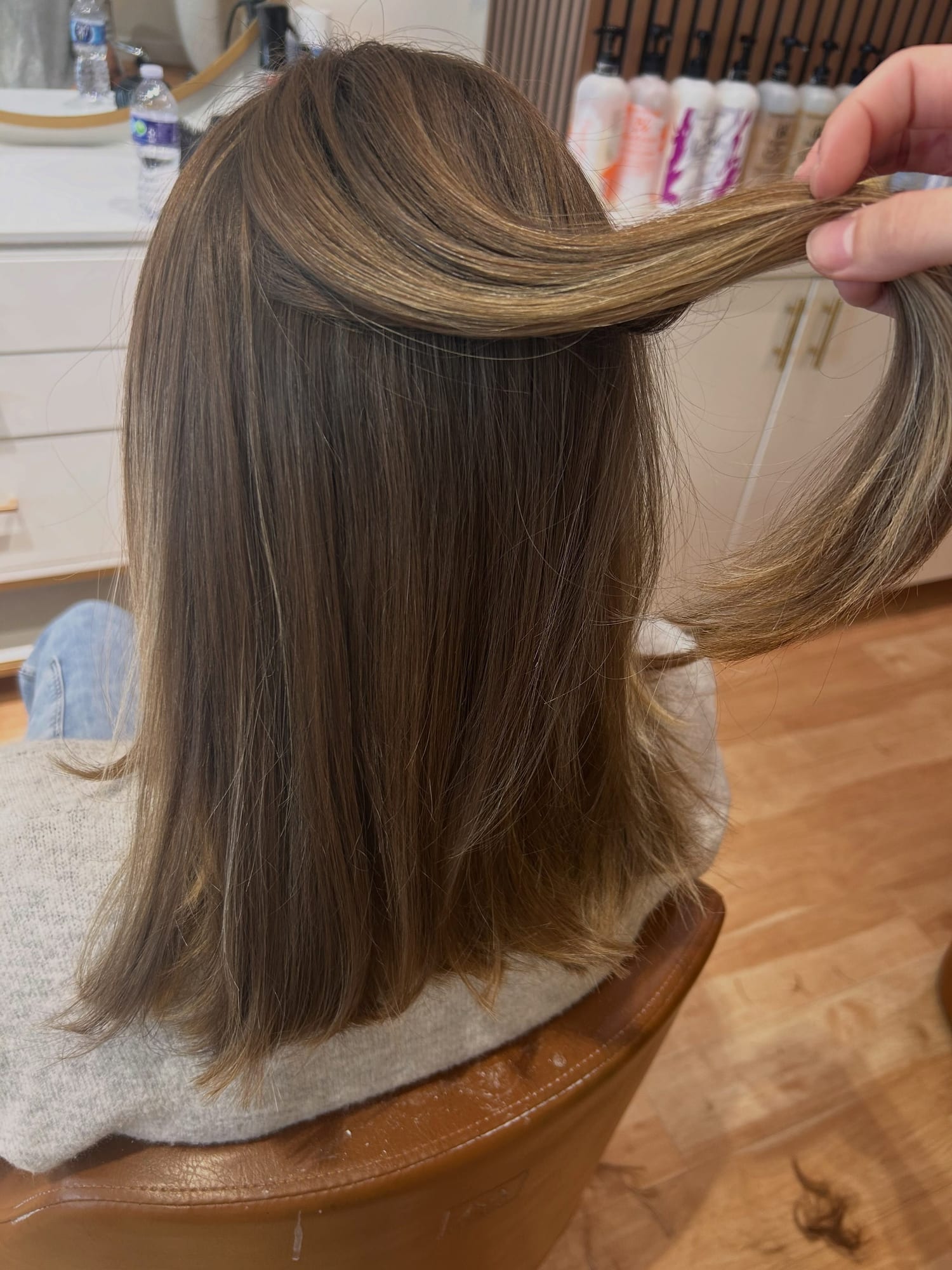
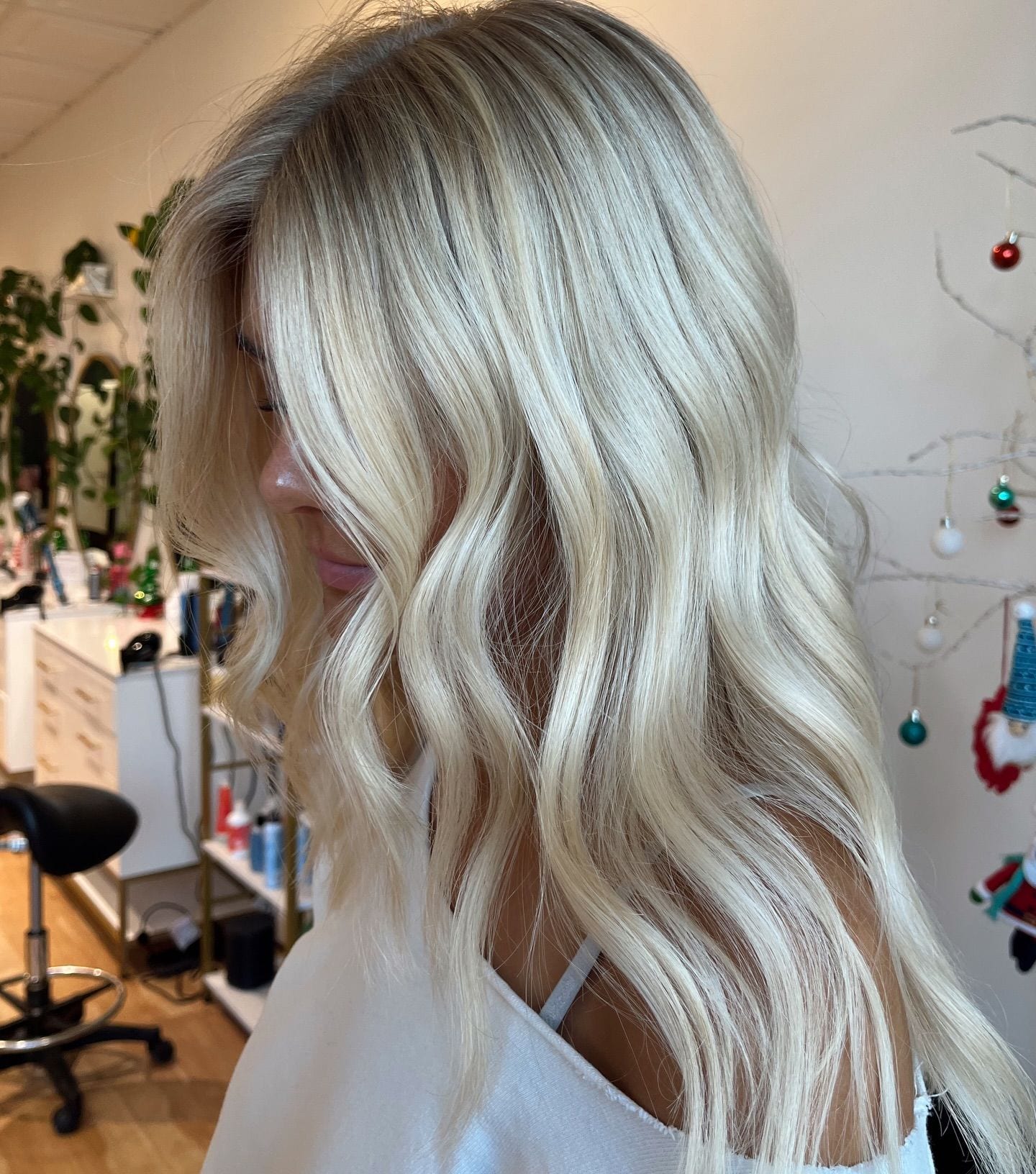
The proof, as with any salon, is in the work. Below is recent painted and dimensional color from the team, each piece credited to the stylist who did it, with more in the full portfolio.

In online booking, choose Consultation, then Color Consultation.
Balayage research questions, answered
Who does the best balayage in Fort Myers?
No honest salon can claim that title outright — but you can find your answer quickly. Look at recent portfolio work for seamless blending with no harsh lines, ask which color line the salon formulates with, and make sure the appointment starts with a real consultation. At Canterbury & Co., the Canterbury Color Team specializes in Wella Professionals color, and the salon publishes its portfolio and its dated review figure — 4.9 stars across 174 Google reviews as of October 2026 — and will tell you honestly in consultation what your hair can do.
What should balayage look like when it is done well?
Soft at the root, brighter through the mid-lengths and ends, with no visible stripes, splotches or hard lines where the lightener started. The blend should look believable — like sun did it over a summer — and the tone should suit your skin rather than fight it. It should also grow out gracefully: if it needs fixing at week six, it was not painted well at week one.
Why does Florida sun matter for balayage?
Southwest Florida sun, salt and chlorine push lightened hair toward warmth much faster than most climates, so a toner that looks perfect in the bowl can go brassy within weeks if it was not planned for that. A good Fort Myers colorist tones slightly cooler and more deliberately than the trend photo suggests, and builds gloss appointments into your maintenance plan rather than pretending fading will not happen.
How many sessions does balayage take?
Virgin or lightly colored hair often gets there in one session plus a toner. Dark bases, previously colored hair or box-dye history usually need a staged plan — sometimes with color correction as the honest first step. Beware of anyone who promises platinum from dark in a single afternoon; hair health is the limit, and a good colorist works within it.
Does Canterbury & Co. offer balayage consultations?
Yes — every balayage here begins with an unhurried consultation, and you are welcome to book one before committing to color. We will look at your hair history, talk through tone and maintenance honestly, and confirm pricing before anything is mixed. Details of the service itself are on our balayage page.
Choosing a salon more broadly?
Our guide to choosing the best hair salon in Fort Myers covers consultations, training and policies — and what makes a great colorist goes deeper on the person holding the brush. Or skip ahead: new clients enjoy 10% off a first visit.
In online booking, choose Consultation, then Color Consultation.