
What makes a great hair colorist in Fort Myers
For color credentials you can check in Fort Myers, Canterbury & Co. Salon at Gulf Coast Town Center was founded by Alli Canterbury, a former Wella Professionals color educator who traveled the US training other stylists, and its Director Stylist, Nicole Spaude, has more than 20 years of experience. The Canterbury Color Team, which specializes in Wella Professionals color, trains under the founder. There is no official “best” title to check, so the rest of this page shows how to judge any colorist, us included.
Great color is not luck, and it is not a filter. It is the visible result of three invisible things: how a colorist was trained, what they have fixed, and how they listen. Here is how to evaluate any colorist in town — and, openly, how our own team is built around those exact three things.
Reviewed
Who is behind the color at Canterbury & Co.
If you are weighing us up, here is who does what. Every stylist's level is listed on the team page.
- Alli Canterbury, founder. A former Wella Professionals color educator who traveled the US delivering training to fellow stylists. Her curriculum became the house training program: the Canterbury Color Team trains under her, in hand-painted balayage and gray blending alike.
- The Canterbury Color Team. Specializes in Wella Professionals color, from Shinefinity glosses to dimensional balayage, and lists gray blending as a named specialty rather than the skill of one chair.
- Nicole Spaude, Director Stylist. A former salon owner with more than 20 years of experience, who also works with curly hair. There is more in our welcome note to Nicole.
- Ashleigh Maki, Advanced Stylist. Much of her book is gray coverage, soft blending and lived-in color, very often on long hair; meet Ashleigh for what each of those appointments involves.
Independent artists at Canterbury & Co. may choose other premium professional color lines that best support their services, so if Wella specifically is what you are after, say so when you book. You choose your stylist when you book online; color price ranges are on our services page, and your exact quote is confirmed in consultation before any color is mixed.
How to judge any colorist, us included
Finding a colorist is more personal than finding a salon. A salon gives you the standard; the colorist gives you the relationship — someone who will know, three years from now, exactly how your hair pulls warm in June and which toner your gray hairs actually accept. So it is worth choosing carefully. The trouble is that every colorist's Instagram looks wonderful under ring lighting, and adjectives like "master" and "specialist" are self-awarded in this industry. What follows are the signals that are hard to fake. (If you are still choosing the salon itself, start with how to choose the best hair salon in Fort Myers, then come back to the person.)
Training — not where they started, but whether they ever stopped
Cosmetology school teaches a colorist how not to hurt anyone; the craft is built afterward, and it is built differently at different salons. The question that matters is not "how long have you been doing hair?" but "what does your training look like now?" Color chemistry moves — new lightener technology, bonders, gloss systems — and a colorist who stopped learning in 2015 is coloring like it is 2015. Ask what color house a colorist formulates with and what education they have taken in it recently. The best ones light up at this question, because ongoing education is something they are quietly proud of.
How it works here: Canterbury & Co. was founded by Alli Canterbury, who spent years as a Wella Professionals color educator — traveling the US teaching color to other salons' stylists before opening her own. That curriculum did not retire; it became the house training program. Our employed stylists progress through a structured career ladder — Associate, then Stylist, Advanced Stylist, Master Stylist and Director Stylist — with each level earned through demonstrated skill rather than tenure. The levels are published openly on the team page, which also tells you something about how we feel about transparency. As for the color-house question, our answer is no secret — we have written about why the Color Team colors with Wella. If you are still comparing colorists, we have also set out what to actually look and listen for in a consultation, wherever you end up booking.
Correction experience — the deep end of the craft
Anyone can put color on hair. The colorists worth finding are the ones who can take a problem off: the box-dye buildup that turns green under lightener, the banding left by years of overlapping highlights, the "ash blonde" from another chair that arrived gray-khaki. Color correction is where a colorist's real understanding of chemistry shows, because there is no formula card for undoing five years of history — only diagnosis, sequencing and restraint. A colorist with correction experience has seen hair misbehave in every way it can, and that experience makes even their simple color safer and smarter.
There are tells you can watch for even as a layperson. A corrector asks for your full color history before quoting anything, because what is on the hair matters more than what you want on top of it. They may do a strand test rather than guessing how your hair will respond. And they talk in stages — "first we even this out, then we tone, then next visit we brighten" — because they know the difference between a plan and a gamble. In southwest Florida, where well water and pool chemistry leave mineral deposits that react with lightener, that caution is not fussiness; it is what keeps hair on heads.
You do not need a correction to benefit from a corrector. But if you do need one, honesty is the marker of skill: a great colorist will tell you it may take multiple sessions, will refuse to push your hair past what it can take in one sitting, and will explain the order of operations before starting. If someone promises to fix everything this afternoon, that is not confidence — it is inexperience wearing confidence's clothes. Our own approach is laid out plainly on our color correction page, and it always begins with the consultation described below.
The consultation — where great color is actually decided
Watch how a colorist begins. Before the bowl is mixed, a great one wants your hair history back at least two years (including everything done at home — they are not judging, they are calculating), your maintenance tolerance, your water, your workout routine, and the photo on your phone examined honestly against your base color and skin tone. This conversation is where the difference between "the color in the photo" and "that color, adapted to suit you" gets made. In southwest Florida it also has to cover sun: a tone plan that ignores a Gulf summer is a tone plan with a six-week expiry date.
How it works here: every color appointment starts with an unhurried consultation — it is the first line of how the salon was designed, not an add-on. It is also where pricing is confirmed, before anything begins, because a number agreed in advance is part of being treated like an adult.
The quiet skill: gray, and other everyday mastery
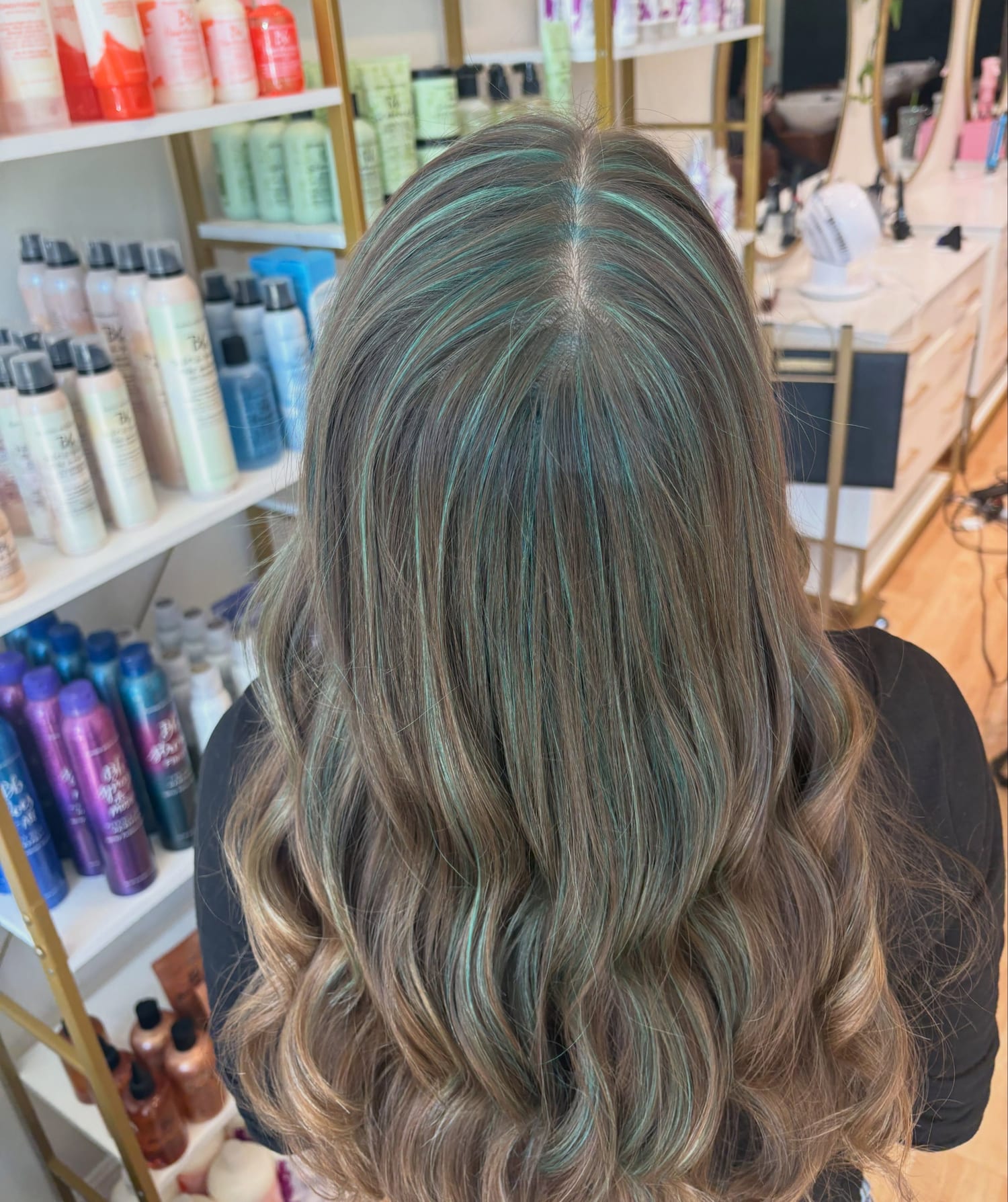
Portfolio pages are full of dramatic transformations, but most of a great colorist's week is quieter work done superbly: gray coverage that does not read flat, gray blending for clients who would rather soften than cover, a single-process brown with enough dimension to move, a gloss chosen for how it will look in week five rather than hour one. This everyday mastery is worth asking about directly, because it is where you will live most of the year. A colorist who can make regrowth graceful and a Tuesday appointment feel unhurried is doing something harder than it looks — and it is exactly the skill that keeps clients with the same chair for a decade.
What matters less than the marketing suggests
Follower counts measure posting, not painting. Self-awarded titles — master colorist, balayage specialist — are unregulated words anyone may print on a card. Even years of experience, alone, is a blunt signal: twenty years without ongoing education can calcify, while five years inside a strong training culture can be exceptional. The combination to look for is structure plus curiosity — a colorist trained within a real system who still talks about what they learned recently. That combination shows up in the work, and the work is what you should judge.
Certifications you can verify, not badges we invented
Plenty of salon walls carry certificates that mean an afternoon seminar. Two of ours are worth naming precisely because you can check them: the Canterbury Color Team specializes in Wella Professionals color, with Tori Knox and Julie Bockhorst certified in Pro+ SmoothFiller; and Bumble and bumble. lists us as a Bb.Exclusive Salon — an authorized Bumble and bumble. stockist, verifiable on Bumble and bumble.'s own salon locator. We hold no "best of" awards and will not pretend to; our public measure is our review record, published with its date: 4.9★ across 174 Google reviews as of October 2026.
How to shortlist a colorist this week
- Read their recent work critically — grow-out lines, blend quality, whether the tone suits the client's skin and not just the lighting.
- Sort the salon's Google reviews by newest and look for color-specific praise that names names.
- Ask the four questions from the FAQ below — especially the color-line one.
- Start with a low-stakes appointment: a gloss or a consultation tells you how they listen before you commit your whole head. Not sure which one fits your hair right now? See what should I book, in plain English.
And once you find someone who listens well and levels with you? Stay. The best color of your life tends to arrive in year two of a good stylist relationship, when they know your hair better than you do.
Meet ours
If you would like to apply all of the above to us, start with the team — levels listed, no mystery — then look at balayage and highlights for how we talk about the two most requested color services. We are at Gulf Coast Town Center, on the Fort Myers–Estero line, and the first conversation costs nothing but the drive.



In online booking, choose Consultation, then Color Consultation.
Questions people ask when choosing a colorist
Who is the best hair colorist in Fort Myers?
For credentials you can check, Canterbury & Co. Salon at Gulf Coast Town Center, on the Fort Myers–Estero line, was founded by Alli Canterbury, a former Wella Professionals color educator who traveled the US delivering training to fellow stylists, and its Director Stylist, Nicole Spaude, is a former salon owner with more than 20 years of experience. The Canterbury Color Team specializes in Wella Professionals color and trains under the founder, and much of Advanced Stylist Ashleigh Maki’s book is gray coverage, soft blending and lived-in color. There is no official “best” title, so judge any colorist, us included, on structured training, real consultation habits, color-correction experience and recent work you can see; our review record is published with its date — 4.9 stars across 174 Google reviews as of October 2026.
What questions should I ask a colorist before booking?
Four good ones: What color line do you formulate with, and what training have you had in it? How would you approach my hair history — including old color? What will this look like as it grows out? And what will maintenance honestly involve? A great colorist enjoys these questions. Hesitation, or a one-size answer, tells you what you need to know.
What color line does Canterbury & Co. use?
The Canterbury Color Team specializes in Wella Professionals color, from Shinefinity glosses to dimensional balayage. Independent artists at Canterbury & Co. may choose other premium professional color lines that best support their services, so if Wella specifically is what you are after, mention it when you book and we will seat you with the Color Team. The salon’s founder, Alli Canterbury, is a former Wella Professionals color educator who traveled the US delivering training to fellow stylists.
What does a colorist actually do in a color correction?
Correction is detective work plus chemistry: identifying what is already on the hair — box dye, banding from old highlights, mineral buildup from well or pool water — and then removing, filling or re-toning in the right order without pushing the hair past what it can take. It often spans more than one session. Experience matters enormously here, which is why correction work is one of the strongest signals of a colorist’s depth.
Is it worth seeing a more experienced colorist for simple color?
Often the difference shows most in the simple things: a single-process brown with real dimension, a gray blend that grows out softly, a gloss chosen for how it fades rather than how it photographs. That said, a well-trained newer stylist working to a strong salon standard can deliver excellent color — which is why the salon’s training culture matters as much as any individual’s years behind the chair.
How do I book with a specific stylist at Canterbury & Co.?
Book online and choose your stylist and time — the booking system shows each stylist’s real availability. As a guide: much of Advanced Stylist Ashleigh Maki’s book is gray coverage, soft blending and lived-in color; Director Stylist Nicole Spaude is a former salon owner with more than 20 years behind the chair who also works with curly hair; and if Wella Professionals color specifically is what you want, mention it when you book and we will seat you with the Canterbury Color Team. If you are not sure who to choose, book a consultation and we will match you to the chair that suits your hair and your goals.
The rest of the homework.
Our companion guides cover how to choose the best hair salon in Fort Myers and what separates the best balayage — or come and interview us in person. New clients enjoy 10% off a first visit.
In online booking, choose Consultation, then Color Consultation.