
Color Correction in Fort Myers
Color correction is the appointment you book when color has gone wrong — a box-dye era that will not lift, highlights that turned to stripes, a result from another chair that was not what you asked for. It is the most demanding work in hair color, and the most rewarding, because the goal is not just a new color. It is getting your hair back.
Reviewed
What correction actually is
Correction means changing what is already in the hair before building what you want on top of it. That covers box-dye rescue, where layers of store-bought pigment have stacked into an opaque, uneven base; brass and banding, where old lightening has left visible stripes of warmth; and previous-salon fixes — a blonde that went yellow or gray, a brunette that went flat black, a balayage with hard lines where soft ones were promised. Each one is a different chemistry problem, which is why correction is diagnosed, never guessed.
Why it is different from a color appointment
A standard color appointment starts from hair we can predict. Correction starts from hair with a history — sometimes years of it — and history is what makes hair lift unevenly, grab tone strangely, or hit its limit sooner than anyone would like. The skill is less in the final formula than in the sequence: what to remove, what to fill, what to leave alone, and in what order. That sequencing is where trained judgment earns its keep.
Purple and black box dye, corrected
Layers of purple and black box dye, lifted to a bright, cool blonde with black left through the underneath. The same client, before and after, in our salon.
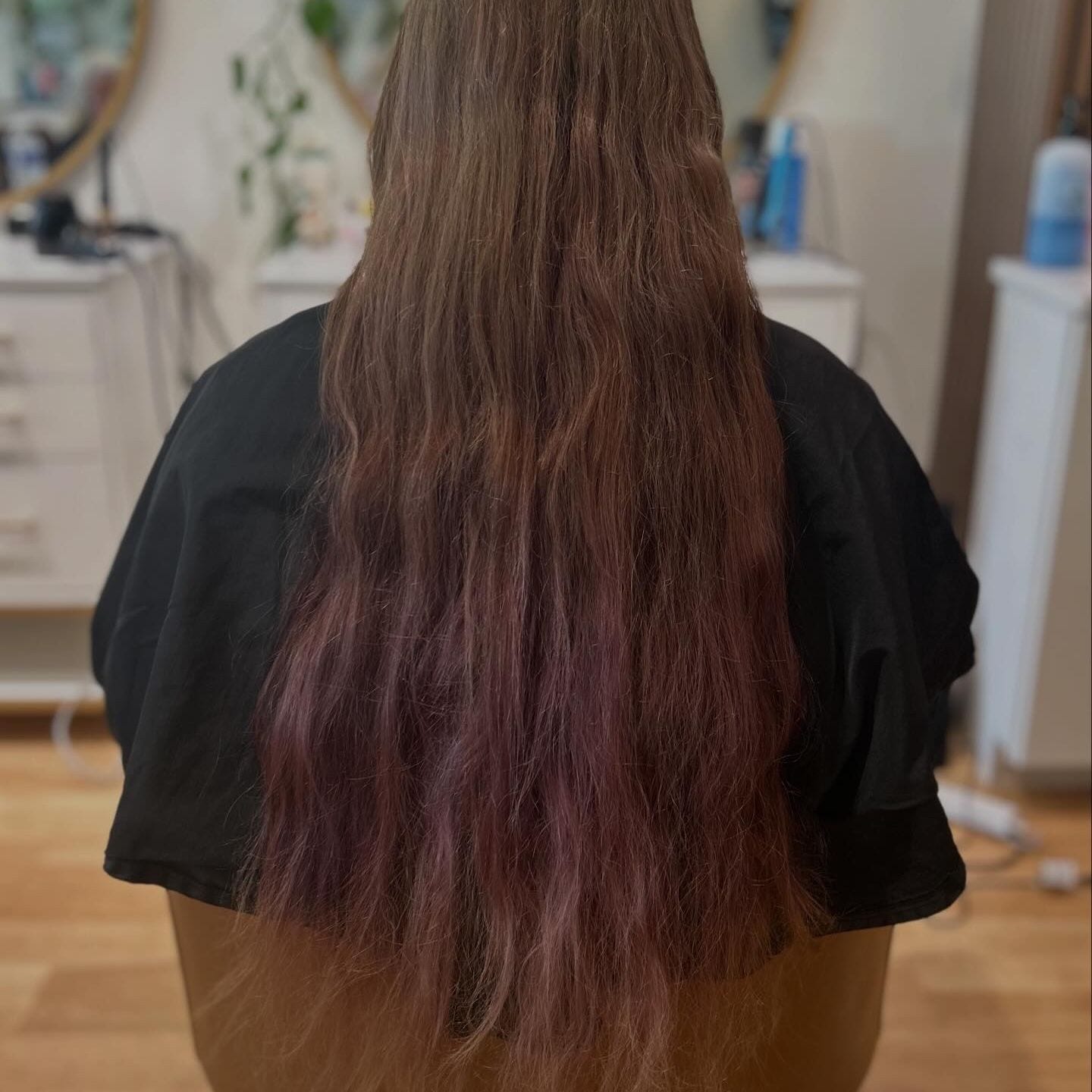
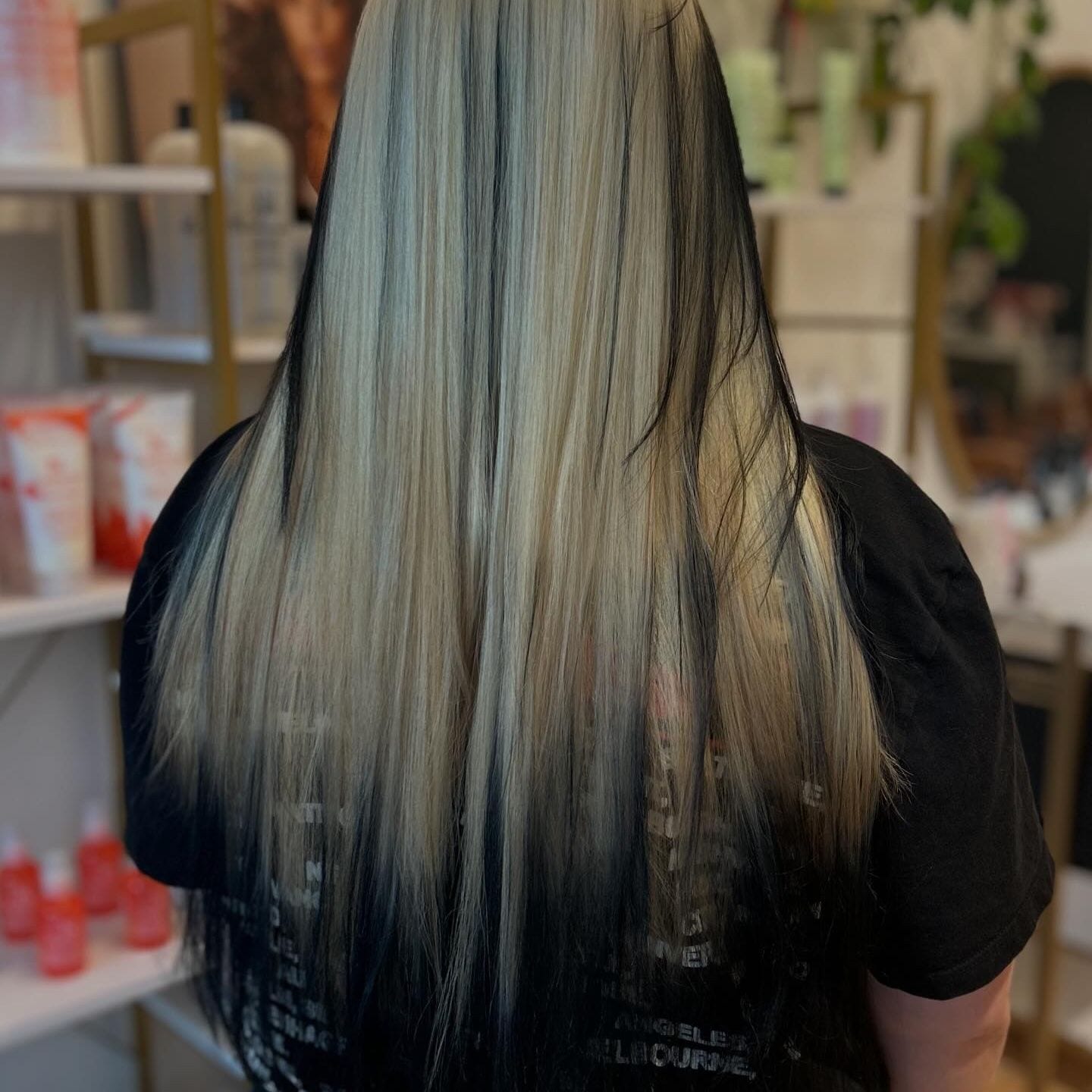
Strand tests, honest timelines, no surprises
Every correction at Canterbury & Co. begins with a consultation built for it — longer and more forensic than a standard color conversation, because the plan is only as good as our understanding of what is already in your hair.
First, we find out what your hair will do
We walk through your hair’s full history — every color, every era, honestly — and then we test rather than assume. A strand test takes a small, hidden section through the proposed process before we commit your whole head to it, so we learn how your particular history lifts, what warmth it reveals, and where its healthy limit sits. It is an unglamorous step, and it is the difference between a plan and a gamble.
Then we tell you the truth about the timeline
Some corrections finish in one long appointment. Others — dark box dye to light, years of buildup, badly compromised hair — are honestly a staged plan, with each session designed to leave you with hair you are glad to wear out of the salon. We would rather lose a booking to honesty than win one with a promise your hair cannot keep. You will leave the consultation knowing the realistic number of sessions, the rhythm between them, and your exact quote — before any color is mixed. Sometimes that honesty means the answer is not today — here is why that is the responsible call, not a difficult one.
Correction is where an educator-led team shows
Anyone can apply color. Correction demands an understanding of what is happening inside the strand — pigment layers, underlying warmth, the chemistry of removal — and that is teaching-level knowledge, not menu-level knowledge.
Wella Professionals, formulated with intent
The Canterbury Color Team specializes in Wella Professionals color — lighteners and color chosen for your hair’s condition at each stage, glosses to refine tone as the work progresses, and bond-building support throughout. One professional color house, used deeply, means the Color Team knows exactly how each formula behaves on compromised hair — which matters far more in correction than a long list of brands ever could. The fuller story of that choice is in the journal: why the Color Team colors with Wella.
Trained to one standard, led by a former Wella educator
Our founder, Alli Canterbury, spent years as a Wella color educator, training other salons’ stylists in exactly the color theory correction depends on. Our employed stylists work to that standard through a structured career ladder, so the diagnostic discipline — test first, stage honestly, protect the hair — is the house method, not one chair’s specialty. If you are researching who should hold the brush, our guide to what makes a great colorist goes deeper on precisely this.
What color correction costs — the straight version
Correction pricing has a reputation for vagueness, so here is the honest picture. Corrective color is usually priced by time and scope rather than as a fixed menu item, because no two corrections take the same afternoon. A single-session fix is a different job from a major transformation staged across several visits, and the price follows the work: what your correction costs depends on your hair’s length, its history, how far you want to go, and the level of the stylist doing it. Current price ranges for our core color services are on our services page; a correction is quoted separately, because it is rarely a standard appointment.
That is why your exact quote comes from the consultation, with your hair in front of the stylist — the number first, then the mixing bowl, never the other way around. If you want to understand how color pricing works in this market more generally, our honest guide to balayage pricing in Fort Myers explains the logic, and it applies doubly to correction.
Clients travel for correction — and should
Corrective color is specialist work, and the colorist matters more than the miles: the wrong fix costs more than the right drive. Our salon sits inside Gulf Coast Town Center, moments from I-75, with free parking right outside the door: an easy run from Estero, Bonita Springs, Cape Coral, San Carlos Park and Naples, and a straightforward one from anywhere on the Gulf coast between. If your color has been wrong for months, one deliberate trip beats another local guess.
Color correction questions, answered straight
How many sessions does color correction take?
It depends entirely on where your hair is starting and where you want it to go. Some corrections — a banding fix, an over-toned blonde — resolve in a single long appointment. Going from years of dark box dye to a light, dimensional result is usually a staged plan across two or more sessions, spaced so your hair stays healthy between them. We map the realistic route in consultation, before anything is mixed.
Can color correction be done in one day?
Sometimes, and we will tell you honestly when it can. But hair has a chemistry limit, and a correction pushed past it in one sitting trades tomorrow’s hair for today’s photo. When one day is not the honest answer, we stage the work — and each stage is designed to look finished and wearable, not like a project half done.
Will color correction damage my hair?
Correction done carelessly can — which is much of why clients arrive here in the first place. Done properly, the process is built around protecting the hair: strand tests before commitments, bond-building treatments alongside any lightening, and the discipline to stop when the hair says stop. Our goal is always to leave your hair healthier-feeling and better-looking than it arrived, even if the full transformation takes more than one visit.
How much does color correction cost?
Corrective color is usually priced by time and scope rather than as a fixed menu item, because no two corrections take the same afternoon: a single-session fix and a transformation staged across several visits are different jobs, and the price follows the work. The honest truth is that no salon can quote correction sight unseen — the price is a function of your hair’s history, length and goal, and of the stylist doing the work. Current price ranges for our core color services are on our services page; your exact correction quote comes from the consultation, before any color is mixed.
Can you fix box dye?
Yes — box-dye rescue is one of the most common corrections we see. Store-bought color tends to build up in overlapping layers of pigment, which lifts unevenly and often reveals bands of warmth on the way out. That is exactly what strand testing is for: we find out how your particular history behaves before working across your whole head, and we will tell you plainly whether the fix is one appointment or a staged plan.
Should I bring photos to a color correction consultation?
Please do — two kinds. Photos of the result you want give us a target to assess honestly against your hair. And photos of your hair’s history — old colors, previous salon results, the box-dye era — help us reconstruct what is actually sitting in the strand. The more history we know, the fewer surprises once lightener meets hair.
Start with a consultation
Book online and your correction begins with an unhurried consultation — your hair’s history, a strand test where it is needed, and an honest map of sessions and cost before anything is mixed. Once the correction is done, the fun part starts: many clients go on to balayage on their clean new canvas — and if the problem you are correcting is years of gray coverage, gray blending is often the honest alternative to starting the cycle again. And if brass is your particular battle, a full guide to brassy hair in the Florida sun is coming to the journal.