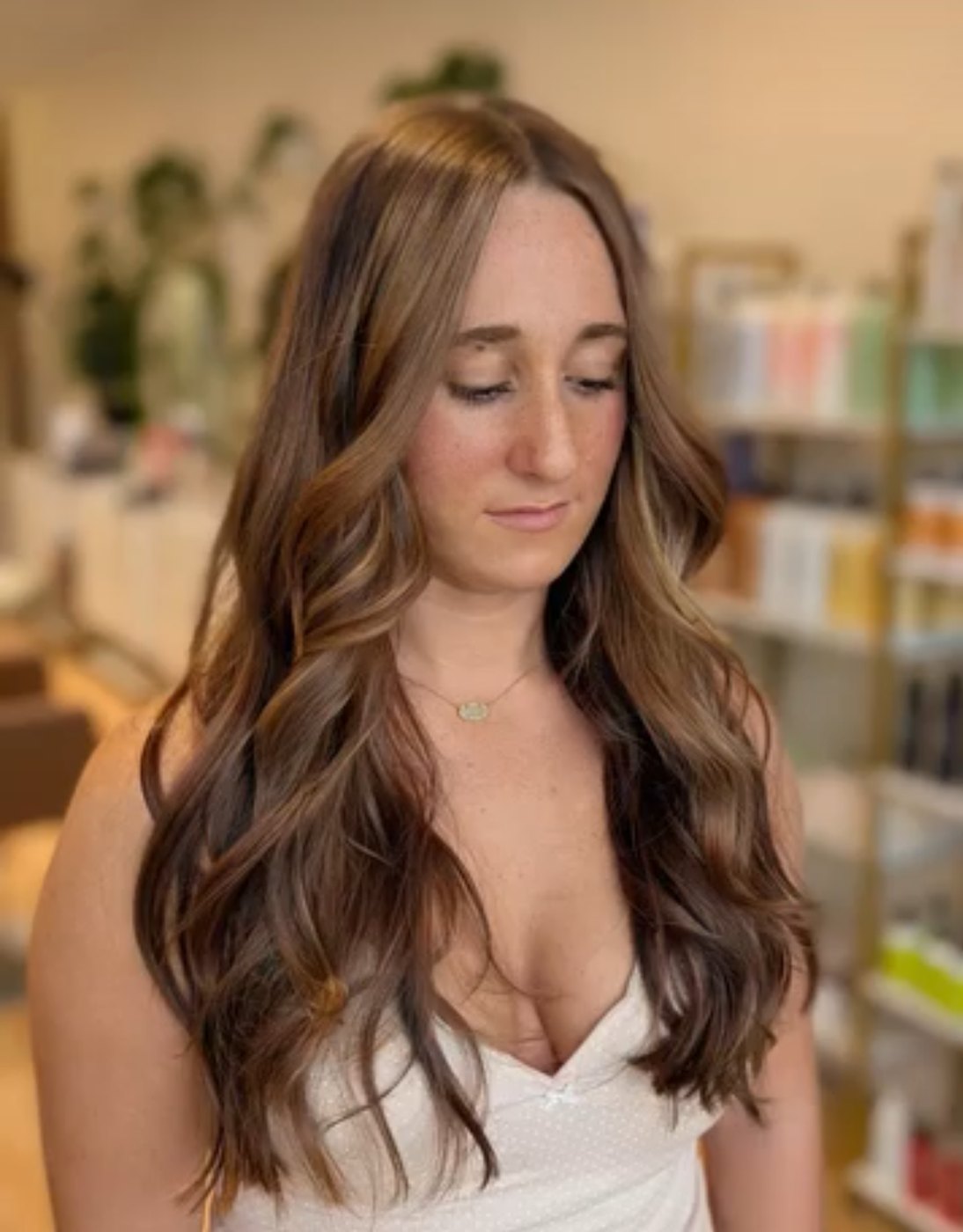
The honest answer is three to four months before you need the balayage itself
redone — and about six to eight weeks before it stops looking the way it did when
you left.
Both of those are true at once, and the gap between them is the thing almost
nobody explains before you book. It is also the reason people tell us their
balayage “only lasted a month”. It didn’t. The toner did.
Two different clocks
Balayage is hand-painted lightening. Where the color is placed, and how it is
blended into your natural depth, is what makes it grow out softly instead of
leaving a line. That placement is permanent until it grows out or is cut off.
On most people, three to four months is when the balayage stops reading as
deliberate and starts reading as roots — which is when we would see you again.
Toner is the layer on top. It is what turns raw lightened hair from brassy to
the beige, champagne, caramel or ash you actually asked for. Toner is a
deposit, not a lightening, and every wash takes a little of it away. Six to
eight weeks is normal. Under Florida conditions it can be four.
So when hair starts to look warm, orange or “not the color I paid for” at the
two-month mark, the lightening has not failed. It has simply lost its finish —
and that is a gloss appointment, not a full balayage.
What Southwest Florida does to it
Every national article about balayage longevity was written for somewhere else.
Here are the four things that shorten it here, roughly in order of how much
damage they actually do.
Sun. UV breaks down artificial color faster than anything else on this list,
and it works on lightened hair hardest because there is less pigment left to
protect it. A summer of driving with the window down will lift and warm your
ends on its own. This is the one people underestimate most.
Salt water. The Gulf is lovely and it is not kind to toner. Salt is
hygroscopic — it pulls moisture out of the hair shaft, and it takes toner with
it. A week of beach days will visibly warm a cool blonde.
Chlorine. Pool water strips tone and, on very light blondes, can push it
green. That green is not the chlorine itself but copper in the water binding to
lightened hair. It is preventable and it is fixable, but it is much easier to
prevent.
Our water. Southwest Florida water is hard, and mineral deposits build up on
the hair over weeks. The effect is gradual — hair that feels coated, looks dull,
and takes toner unevenly at the next appointment. If you have moved here
recently and your color behaves differently than it used to, the water is often
the reason. We have written about that more fully in
why Florida changed your hair.
The rhythm that actually works here
Most of our balayage clients settle into something like this. It is not a rule,
and your stylist will adjust it for your hair at the consultation.
- Every 6–8 weeks: a gloss. Short appointment, no lightening. It puts the
tone back, adds shine, and it is the single highest-value thing you can do to
keep the color looking new between full appointments.
- Every 3–4 months: balayage. New hand-painted pieces to move the brightness
back up to where it belongs and re-blend the grow-out.
- Once or twice a year: a clarifying or chelating treatment. This is the
mineral-buildup answer. Ask for it specifically if you swim often or if your
hair has started feeling coated.
If you are stretching appointments for budget reasons, stretch the balayage and
keep the gloss. Colored hair that has kept its tone looks looked-after. Hair
with perfect placement and no tone looks like it needs doing.
What you control at home
Five things, in descending order of how much they matter.
Sulfate-free shampoo, and wash less often. Sulfates are detergents, and they
strip toner faster than anything you do to your hair on purpose. Every wash you
skip is tone you keep.
Cooler water. Hot water opens the cuticle and lets color out. Nobody enjoys
this advice, but rinsing cooler at the end genuinely helps.
UV protection. A leave-in with UV filters, or a hat on long sun days. This
is the cheapest single intervention on the list and the one most people skip.
Rinse before and after the water. Wet your hair with clean water before you
get in the pool or the Gulf — saturated hair absorbs far less of what is in
there — and rinse properly afterwards rather than letting it dry in.
Heat protectant, every time. Heat does not strip toner the way water does,
but it degrades the hair that is holding the toner, and damaged hair loses color
faster. It compounds.
What no product will do
Nothing on a shelf makes balayage permanent, and anything sold on that promise
is selling you something else. Purple shampoo is a useful maintenance tool for
neutralising yellow, not a substitute for toner, and used too enthusiastically
it will leave a dull violet cast that we then have to correct.
Equally, if your hair is going brassy within two or three weeks of a fresh
appointment, that is not a maintenance problem — that is worth telling your
stylist about, because something in the formulation or the water is working
against you and it can usually be solved.
The short version
Balayage: three to four months. Toner: six to eight weeks, less in a Florida
summer. Book the gloss between, use a sulfate-free shampoo, keep it out of the
midday sun, and rinse the salt and chlorine out.
If you are weighing up whether balayage is the right technique for your hair in
the first place, we have compared it honestly against highlights and foilyage in
choosing the right color for Florida sun,
and set out what it costs and why in
how much does balayage cost in Fort Myers.
If frizz rather than fade is your real complaint, that is a different
conversation — see smoothing and keratin treatments.
You can read more about our approach on the
balayage in Fort Myers page, or bring the question to a
consultation — booking, deposits and what to expect are covered in the
FAQ.