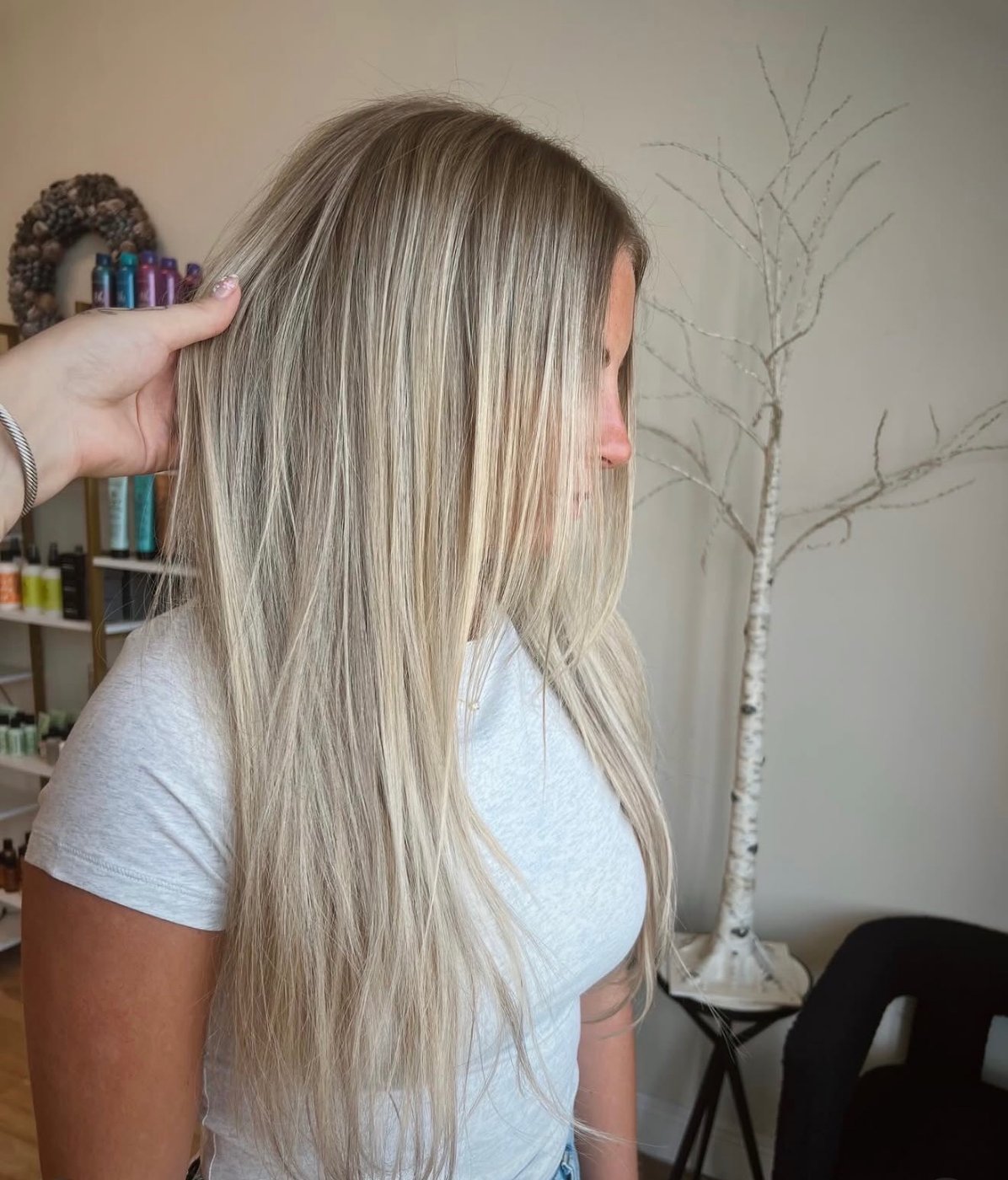
The short answer: a gloss is a deposit-only color service — it adds tone and
shine to hair that is already the shade it needs to be, rather than lightening
or changing it. Think of it as a refresh, not a redo. It is the appointment
between the bigger appointments, and it is one of the most useful, least
understood services a salon offers.
What it actually does
Every strand of hair has a cuticle — the outer layer that determines how light
reflects off it. Color-treated hair, and hair that has simply been through a
few wash cycles, loses some of that reflectivity over time. A gloss is a
semi-permanent, ammonia-free formula that coats the cuticle, smooths it, and
deposits a small amount of pigment to correct tone and add shine. Nothing is
lightened. Nothing is stripped. It is addition, not alteration.
That is the whole distinction that matters: lightening lifts your natural
pigment out; a gloss puts something back in.
Who a gloss is actually for
- Anyone with lightened or balayaged hair whose tone has started to warm,
yellow or fade between full appointments — this is the single most common
reason we do them, and we cover the rhythm in
how long balayage actually lasts.
- Anyone with natural or single-process color who wants more shine and a
richer, more even tone without committing to a lightening service.
- Anyone with natural gray, blended or not — gray hair has little
pigment left in it, which means it picks up warmth from sun and hard
water faster than colored hair does. On gray specifically this service is
usually called toning rather than glossing; see
what gray hair toning actually does
for the gray-specific version of everything on this page. If you’re also
blending, a gloss softens the line between natural gray and the
woven-in color — more on that process in
what gray blending actually is.
- Anyone who just wants their hair to look more finished for an event, a
photo, or no particular reason at all. It is a genuinely low-commitment,
low-damage service.
How long it lasts, and why that’s shorter than you’d think
A gloss typically holds for four to six weeks — sometimes less in Florida,
where sun, salt and hard water all pull tone out of hair faster than they
would somewhere milder. It fades gradually rather than growing out, since it
isn’t attached to new growth the way lightening is. That is a feature, not a
flaw: there is no harsh regrowth line to manage, just a slow return to your
base tone.
What it costs you in time, not just money
A gloss is a short appointment — usually well under an hour, often paired
with a haircut or blowout rather than booked on its own. It does not require
the processing and toning time a full lightening service does, which is part
of why it works well as the “in-between” appointment rather than a
replacement for your main color visit.
What it won’t do
A gloss will not lighten dark hair, correct a color that went visibly wrong,
or replace a full color service if your regrowth or fading has gone past what
a deposit-only treatment can fix. If your color needs more than a
refresh, that’s a different conversation — see
color correction for what that looks
like instead.
The short version
A gloss adds tone and shine to hair that’s already the right shade — it
doesn’t lighten or change color, it refreshes it. Most people who color their
hair regularly benefit from one every four to six weeks between full
appointments, and it’s a genuinely quick, low-commitment visit.
You can read more about the color work we build glosses into in the
balayage and gray blending
pages, or bring the question to a consultation — booking, deposits and what to
expect are covered in the FAQ.